Enterprise AI Automation & Intelligent Workflows
Stop wasting human potential on robotic data entry. We architect highly secure, cognitive Business Process Automation pipelines that eliminate operational friction and massively scale your output without increasing your headcount.
Understanding the Shift to Intelligent Automation
AI Automation is the convergence of traditional software logic with advanced cognitive capabilities provided by Large Language Models (LLMs). Unlike older systems that blindly follow hardcoded instructions, intelligent automation can read, analyze, categorize, and make highly contextual decisions before routing data to the next step in a pipeline.
For enterprise leaders, navigating the automation landscape requires clarity. It is crucial to understand the distinct boundaries between Autonomous AI Agents, Intelligent AI Automation, Traditional Workflow Automation, and Robotic Process Automation (RPA).
While traditional Business Process Automation moves data sequentially based on strict rules, AI Automation injects decision-making nodes into the flow. It reads unstructured emails, summarizes multi-page legal contracts, and intelligently queries external REST APIs to formulate a response—effectively bridging the gap between predictable data pipelines and unpredictable human interactions.
Navigating the Automation Spectrum
RPA (Robotic Process Automation)
Simulates human screen clicks and keystrokes. Highly brittle and breaks if a UI button changes position.
Traditional Workflow Automation
API-driven if/then logic (e.g., standard Zapier connections). Reliable, but incapable of processing unstructured text or making dynamic decisions.
Intelligent AI Automation
Blends API infrastructure with LLM-powered nodes capable of semantic search, sentiment analysis, and dynamic data extraction.
AI Agents
Autonomous systems that use tools (like the Model Context Protocol) to iteratively plan, execute, and adapt to complex open-ended goals.
Real-World Business Processes We Automate
We don't build generic marketing toys. We architect mission-critical Process Automation Software designed specifically for enterprise operations, connecting your existing infrastructure into unified, intelligent pipelines.
Website Lead Qualification
Instantly capture form submissions, use AI to score the lead based on budget and intent, and directly route high-value prospects to your CRM while emailing the sales team.
Customer Support Routing
Analyze incoming support tickets for sentiment and semantic intent. Auto-reply to common questions or instantly route escalations to the precise engineering team.
Invoice Processing
Monitor dedicated accounting inboxes. When a PDF invoice arrives, use intelligent OCR to extract line items, vendor details, and amounts, pushing the structured data directly to your ERP.
HR Onboarding
Trigger an automation sequence when a candidate accepts an offer. Automatically generate employee email accounts, Slack invites, software licenses, and payroll entries.
ERP & System Synchronization
Seamlessly bridge the gap between legacy databases and modern cloud systems. Prevent data silos by establishing bi-directional real-time data syncs via REST APIs.
Document Approvals
Automate complex, multi-tiered legal and financial approval chains. AI summarizes the document and routes it to the designated executive for a one-click slack approval.
Our AI Automation Framework
Enterprise automation requires rigorous engineering. A broken workflow can halt business operations. We follow a strict methodology to ensure 100% uptime, total data consistency, and robust fault tolerance.
Discover
We conduct deep stakeholder interviews to map out your current manual processes, identifying exact bottlenecks and API integration points.
Design
We architect a resilient AI Workflow Automation blueprint, defining logic gates, data transformations, and Human-in-the-Loop intervention points.
Integrate
Our engineers securely connect your CRM, ERP, and proprietary databases using API-first development and enterprise-grade encryption protocols.
Automate
We build the cognitive pipelines utilizing tools like n8n and LangChain, injecting LLM intelligence precisely where dynamic reasoning is required.
Monitor
We deploy the system to a staging environment for rigorous stress testing, followed by production deployment with comprehensive error logging.
Optimize
We provide long-term maintenance, continually refining prompt structures, upgrading API versions, and optimizing infrastructure for maximum ROI.
Deep Dive: The VertexSolve Discovery & Design Phase
Before a single line of Node.js code is written or an n8n node is configured, our engineering team engages in a comprehensive Process Audit. Enterprise Business Process Automation fails when it is rushed. We embed our analysts within your operational teams to observe how data moves through your organization. We document every manual spreadsheet update, every copy-paste action between your CRM and ERP, and every repetitive email sent to vendors.
This rigorous discovery phase allows us to identify the "Invisible Costs" of your current architecture. Often, employees develop undocumented workarounds to deal with rigid software. Our goal is to identify these friction points and architect a unified AI Workflow Automation blueprint that natively handles edge cases. We define strict logic gates, data transformation schemas, and explicit Human-in-the-Loop (HITL) intervention thresholds. If an LLM parses a vendor invoice but the confidence score of the extracted total is below 98%, the system must automatically route the document to an AP clerk via a Slack notification for manual review. This guarantees absolute data integrity.
Integration & Secure Architecture
True Enterprise Automation is fundamentally an API integration challenge. We specialize in connecting legacy on-premise systems with modern cloud infrastructure. Our engineers utilize robust REST APIs, GraphQL endpoints, and direct PostgreSQL database connections to ensure bi-directional data flow. We do not rely on fragile web scrapers or brittle RPA bots that break when a UI button changes color.
Furthermore, we heavily utilize the Model Context Protocol (MCP) to standardize how our AI models interact with your internal systems. MCP allows an AI agent to securely query your proprietary databases, summarize the findings, and generate a client-facing report without ever exposing the raw database credentials to the public internet. This architecture ensures that your Workflow Automation scales securely, handling thousands of concurrent requests without degradation.
Comprehensive Domain Capabilities
Intelligent Document Automation
Enterprises drown in unstructured documents: PDFs, scanned invoices, legal contracts, and handwritten forms. Traditional OCR fails when document templates vary.
By utilizing multimodal LLMs (such as Anthropic Claude or Google Gemini) combined with robust workflow automation software, we extract structured JSON data from highly variable documents. This data is then securely pushed to your SaaS applications or local PostgreSQL databases.
- Vendor invoice reconciliation
- Legal contract metadata extraction
- Medical record digitization

Finance & Analytics Automation
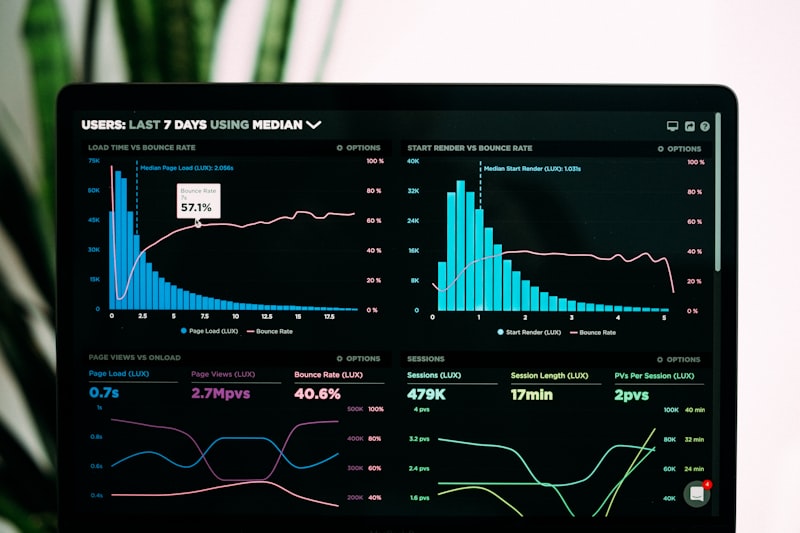
Finance departments waste thousands of hours exporting CSVs and manually compiling monthly executive reports. We build Process Automation Software that connects directly to Stripe, QuickBooks, Salesforce, and internal databases.
Our custom automated reporting pipelines execute on rigid schedules, compiling complex financial metrics into unified dashboards or generating human-readable narrative summaries via OpenAI APIs for stakeholder distribution.
- Real-time KPI aggregation
- Automated expense categorization
- Subscription billing anomaly detection
Transforming Customer Support via Intelligent Automation
Modern customer support departments are overwhelmed by repetitive inquiries that drain human resources. Traditional chatbots fail because they rely on rigid decision trees. Our AI Automation systems transform customer support by integrating advanced Natural Language Processing (NLP) directly into your ticketing software (like Zendesk, Intercom, or Jira Service Desk).
When a customer submits a ticket, our AI Workflow Automation immediately analyzes the text. It uses semantic search (via vector databases like Pinecone or pgvector) to query your entire internal knowledge base. If the solution is found with high confidence, the system generates a personalized, empathetic response using OpenAI or Anthropic Claude, drafting the reply for a human agent to review, or sending it automatically for low-risk inquiries. Simultaneously, it extracts the customer's intent and automatically updates the relevant tags in your CRM.
If the ticket requires technical escalation, the automation routes the request to the specific engineering tier, translating the customer's complaint into a structured bug report, and linking the relevant code commits. This drastically reduces First Response Time (FRT) and significantly improves customer satisfaction scores.
Automated Sales & CRM Workflows
Sales teams should focus on closing deals, not data entry. Our Process Automation Software eliminates the administrative burden of pipeline management. When a new lead enters your pipeline via a website form, our system immediately enriches the lead data. It queries external APIs (like Clearbit or Apollo) to gather company size, revenue, and recent news events.
The LLM then analyzes this enriched profile against your Ideal Customer Profile (ICP) to generate a lead score. If the lead is highly qualified, the system automatically drafts a hyper-personalized outreach email referencing their recent company news, drops it into your sales rep's drafts folder, and sends a Slack notification to the team. If the lead is low priority, they are automatically routed into a nurturing sequence. This end-to-end CRM automation ensures that no opportunity falls through the cracks and your sales team operates with maximum efficiency.
Human Resources & Employee Lifecycle Automation
Enterprise HR departments handle immense volumes of unstructured data. We deploy AI Workflow Automation to streamline the entire employee lifecycle. During recruitment, our systems parse hundreds of incoming resumes, utilizing LLMs to extract core competencies, years of experience, and relevant certifications, instantly populating your ATS (Applicant Tracking System) with structured data.
Once a candidate is hired, the onboarding automation sequence is triggered. The system automatically provisions the new employee's Google Workspace account, generates their specific software licenses based on their role, invites them to the necessary Slack channels, and schedules introductory meetings with key stakeholders. It also automatically generates the employment contract, routes it for e-signatures via DocuSign, and pushes the finalized document into the employee's highly secure HR folder. This ensures a flawless, zero-touch onboarding experience that impresses new hires and saves HR administrators countless hours.
Enterprise Technology & Security
We exclusively utilize state-of-the-art backend infrastructure and frontier AI models. Our engineering focuses on security-first design, ensuring your proprietary data remains highly confidential and fully encrypted in transit.
The Engineering Stack
We heavily leverage n8n for powerful, self-hosted visual workflow orchestration, circumventing the aggressive rate limits and data privacy concerns associated with SaaS automation platforms. For complex agentic behavior, we implement LangChain within highly scalable Node.js environments, deployed via Docker.
Our systems interface perfectly with OpenAI APIs, Anthropic APIs (Claude), and Google Gemini APIs. By adhering strictly to REST API standards and utilizing the emerging Model Context Protocol (MCP), we ensure our automated systems have secure, permissioned access to your internal PostgreSQL databases.
Security & Ownership
- Human-in-the-Loop (HITL) Workflows
High-risk transactions or sensitive client communications are dynamically routed to a human dashboard for final approval before execution.
- Source Code Ownership
Unlike proprietary SaaS solutions, we engineer custom scripts and logic blocks that you own entirely. No platform lock-in.
- Long-Term Maintenance
APIs constantly deprecate and change. We provide continuous maintenance to ensure your automation never suffers from sudden downtime.
Data Compliance, Privacy, and Audit Trails
For enterprise organizations operating within heavily regulated industries—such as healthcare, financial services, or government contracting—data compliance is not optional. It is the foundational pillar of any software initiative. When we engineer your AI Workflow Automation, we strictly adhere to zero-data-retention policies. This means that when your sensitive data is processed by large language models, it is explicitly excluded from being used to train future iterations of those models.
Furthermore, our automation architecture inherently generates immutable audit trails for every automated action. Every API call, every LLM inference, and every data transformation is logged with precise cryptographic timestamps within your PostgreSQL database. If an auditor needs to verify why an invoice was approved or how a lead was routed on a specific date, your team can retrieve the exact logic execution path in seconds. This level of transparency transforms automation from a black-box liability into a verifiable corporate asset, guaranteeing that your business processes scale securely and compliantly.
Custom Middleware vs. Fragile Point-to-Point Integrations
One of the most common catastrophic mistakes enterprise teams make is relying exclusively on point-to-point integrations (e.g., using a native CRM plugin to talk directly to an ERP). While these native integrations are fast to set up, they inherently lack logic constraints. If a salesperson enters a mathematically impossible discount into the CRM, a point-to-point integration will blindly sync that corrupted data into the ERP, creating a cascading failure in accounting.
Our Intelligent Automation acts as custom middleware. Data does not travel directly from Application A to Application B. Instead, the data flows from Application A into our secure n8n processing pipeline. Here, the data is standardized, cleaned, and evaluated against strict business rules. If cognitive analysis is required, the payload is securely passed to an LLM for classification. Only after the payload passes all validation checks is it finally delivered to Application B.
This middleware approach radically reduces technical debt. When Application A inevitably undergoes a forced API upgrade, your core business logic is perfectly protected within the middleware layer. Our engineers simply update the incoming webhook receiver, and the entire enterprise pipeline continues to operate without interruption. This is the difference between brittle automation and robust enterprise architecture.
Industry-Specific Automation Applications
Healthcare
Securely route patient intakes, automate insurance eligibility verification, and sync appointment schedules into EMR systems.
Legal
Automate contract generation, securely extract case metadata using AI, and intelligently categorize incoming legal discovery files.
Education
Streamline student enrollment pipelines, automate grading syncs, and generate personalized parent-teacher communication updates.
Manufacturing
Connect factory floor IoT metrics directly to ERP software to automate predictive maintenance and supply chain procurement.
Retail & E-commerce
Automate inventory forecasting, dynamically restock products, and instantly route complex shipping disputes to customer service.
Real Estate
Automatically ingest listing data from MLS portals, route buyer leads via SMS, and generate customized rental agreements.
Enterprise FAQ: AI & Automation
Expert insights into intelligent automation, data security, and legacy system integrations.
What is the difference between AI Automation and RPA?
Robotic Process Automation (RPA) executes rigid, rule-based scripts (like clicking specific screen coordinates). AI Automation uses LLMs to interpret unstructured data, make dynamic decisions, and adapt to changing variables without breaking.
How secure is our proprietary data?
We employ security-first engineering. We utilize zero-retention API endpoints for LLM providers (meaning OpenAI/Anthropic do not train on your data) and implement end-to-end encryption within your VPC.
Can you automate workflows with legacy ERP systems?
Yes. Even if your legacy ERP lacks modern REST APIs, we can utilize secure database connectors, automated CSV drops, or custom middleware to synchronize data perfectly.
What happens if an AI makes a mistake?
We design strict Human-in-the-Loop (HITL) workflows for critical decisions. The AI drafts the response, routes the invoice, or flags the anomaly, but a human must click 'Approve' before execution.
Do we retain ownership of the automation scripts?
Absolutely. Unlike SaaS platforms that hold your workflows hostage behind a monthly paywall, we engineer custom solutions where you retain 100% source code ownership.
What is the typical ROI for enterprise automation?
While specific ROI varies, most enterprises see a return within 6 months through the massive reduction in manual data entry hours and the prevention of human-error-related financial losses.
How do you handle API rate limits and failures?
Our architecture utilizes exponential backoff retry logic, dead-letter queues, and robust error logging (via tools like Sentry) to ensure no data is lost during temporary API outages.
What is the Model Context Protocol (MCP)?
MCP is an emerging open standard that allows AI models to securely and seamlessly connect to external data sources and internal tools, fundamentally streamlining enterprise agent integrations.
Can we use on-premise AI models instead of OpenAI?
Yes. For organizations with strict compliance requirements, we can deploy secure, self-hosted open-source models (like Llama 3) entirely within your internal cloud infrastructure.
How long does a typical automation project take?
A standard workflow sprint (Discovery to Go-Live) typically takes 4 to 8 weeks, depending on the complexity of the legacy APIs and the required security audits.
Do you provide post-launch maintenance?
Yes. APIs update constantly. We provide comprehensive long-term maintenance contracts to proactively update endpoints, refine prompts, and monitor system health.
How do we get started?
Click 'Schedule an AI Discovery Call' to speak directly with one of our lead automation architects. We will conduct a high-level audit of your current bottlenecks and propose a technical roadmap.
Why Choose VertexSolve for Intelligent Automation?
We are not just a marketing agency; we are an elite engineering firm specializing in bridging complex corporate infrastructure. When you partner with us, you receive flawless architecture, intuitive UI/UX design for your internal admin panels, and rigorous adherence to data privacy laws. We map business outcomes directly to technical execution.
Automate Your Business Today